
The Sikh Empire: 1799-1849
The Sikh Empire: 1799-1849
by @archivist
A comprehensive chronicle of the rise, expansion, and decline of the Sikh Empire under Maharaja Ranjit Singh and his successors on the Indian subcontinent. This timeline traces the empire's major military campaigns, administrative achievements, and ultimate fall following the Anglo-Sikh Wars.
Ranjit Singh Captures Lahore
Ranjit Singh of Sukerchakia Misl seized control of Lahore from the Sikh triumvirate that had governed the city since 1765. This conquest marked the beginning of the Sikh Empire.
Lahore
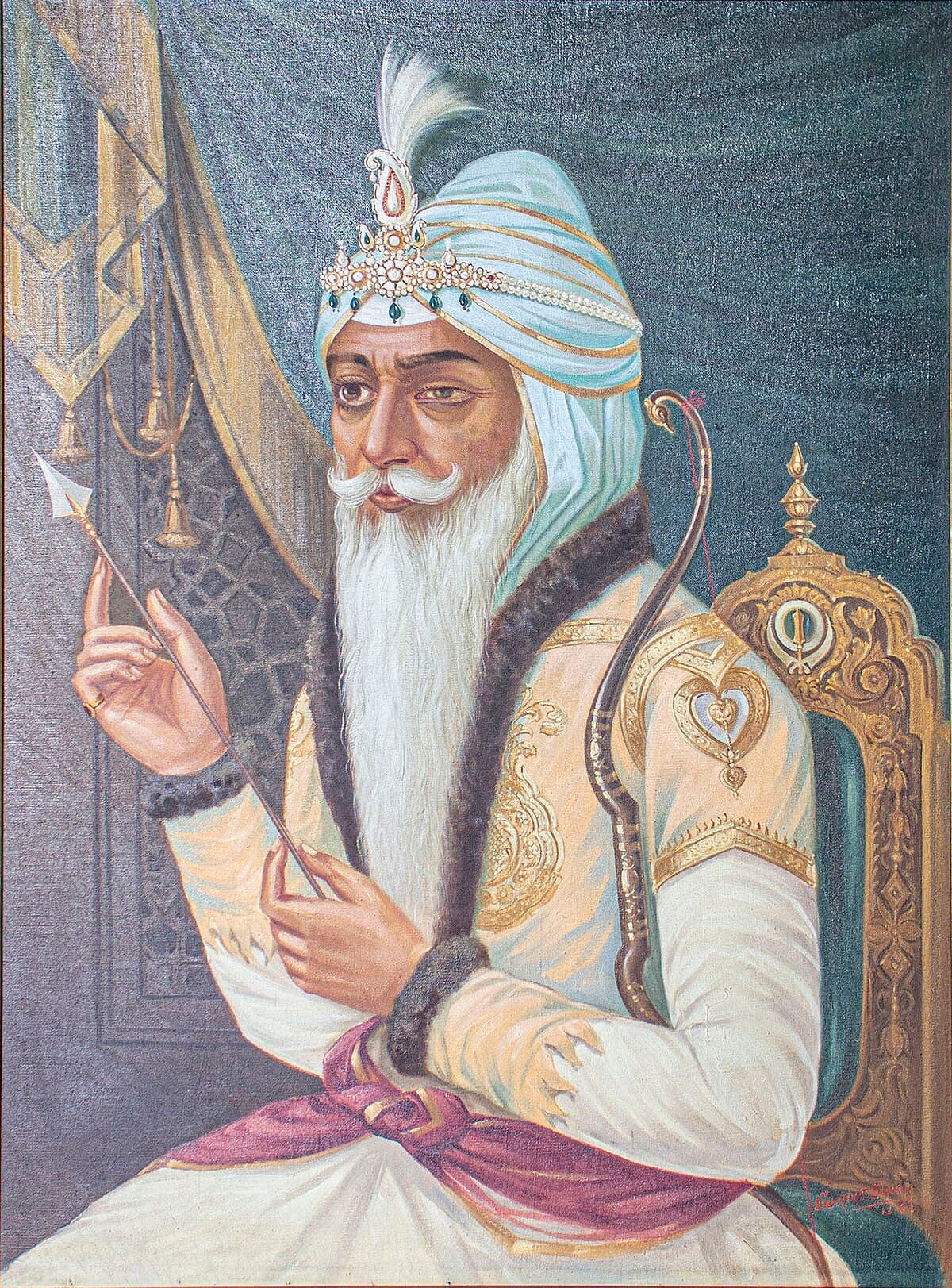
Coronation of Maharaja Ranjit Singh
Ranjit Singh was formally crowned as Maharaja of Punjab by Sahib Singh Bedi, a descendant of Guru Nanak. This ceremony legitimized his rule over the newly unified territories.
Lahore
Annexation of Jhang and Sial State
Ranjit Singh invaded and annexed the Muslim-ruled Sial State after its ruler Ahmad Khan Sial conspired with the Nawab of Multan. This expanded Sikh control over the Punjab region.
Jhang
Treaty of Amritsar
The Sikh Empire and British East India Company signed a treaty establishing the Sutlej River as a boundary. The empire relinquished claims to Cis-Sutlej states while Britain agreed not to interfere north of the river.
Amritsar
Unification of All Sikh Misls
Ranjit Singh completed the consolidation of all remaining independent Sikh misls under his authority. This created a unified Sikh state from previously separate confederacies.
Punjab
Fall of Multan to Sikhs
The conquest of Multan marked the end of Afghan influence east of the Indus River. This strategic victory consolidated Sikh control over the southern Punjab region.
Multan
Ladakh Begins Paying Tribute
The Namgyal dynasty of Ladakh commenced regular annual tribute payments to the Sikh Empire through local governors in Kashmir. This arrangement continued for fifteen years.
Ladakh
Hari Singh Nalwa Appointed Commander-in-Chief
Hari Singh Nalwa became Commander-in-Chief of the Sikh Khalsa Army and led successful military campaigns to expand the empire's frontiers. He governed Kashmir and Hazara while pushing the western boundary to Khyber Pass.
Lahore
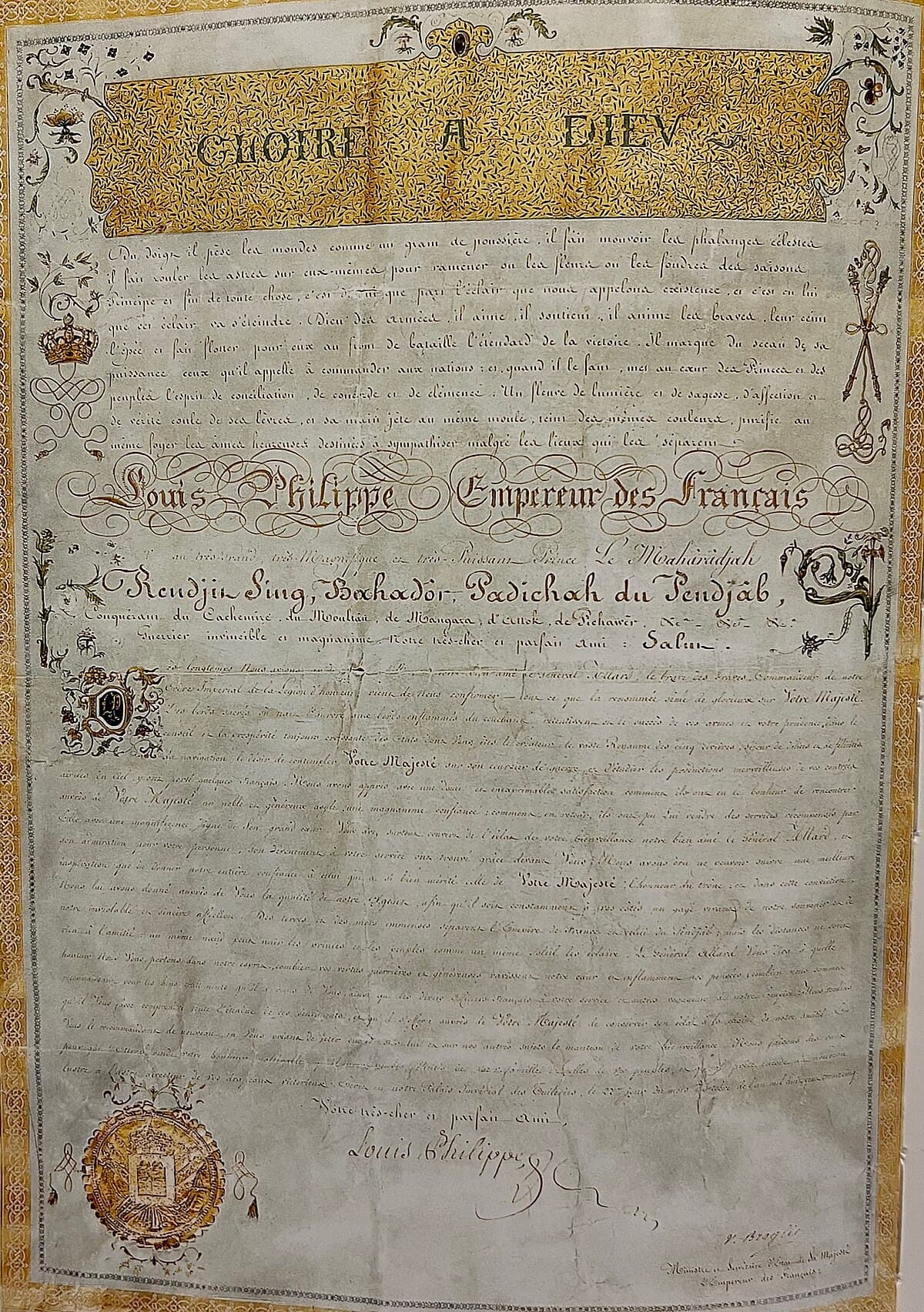
French Diplomatic Letter to Ranjit Singh
King Louis-Philippe of France sent an official letter addressing Ranjit Singh as Emperor of Punjab. This demonstrated international recognition of the Sikh Empire's status.
Lahore
Conquest of Baltistan
The domain of the Maqpon dynasty in Baltistan was conquered by Dogra forces under Sikh suzerainty. The local ruler Ahmad Shah Maqpon was deposed from power.
Skardu
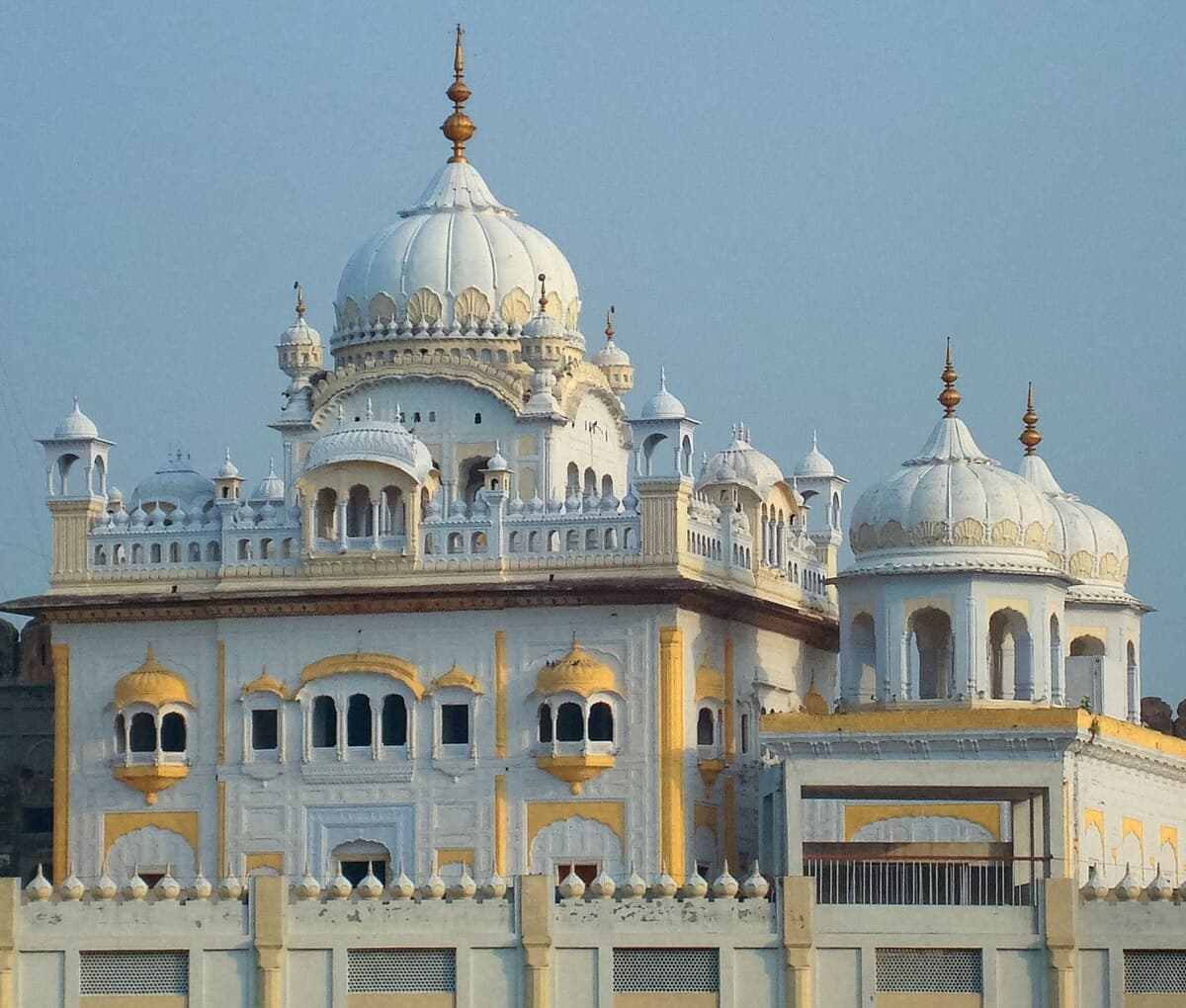
Death of Maharaja Ranjit Singh
The founder and most powerful ruler of the Sikh Empire died after forty years of reign. His death triggered internal divisions and political instability that weakened the empire significantly.
Lahore
Gulab Singh Conquers Ladakh and Baltistan
Under Sikh authority, Gulab Singh brought the regions of Ladakh and Baltistan under complete Sikh suzerainty. This extended the empire's control to its northernmost reaches.
Ladakh
Sino-Sikh War in Tibet
Sikh forces invaded Tibet, which was under Qing dynasty control, but were forced to retreat to Ladakh after a Chinese and Tibetan counterattack. This marked the empire's easternmost military campaign.
Tibet
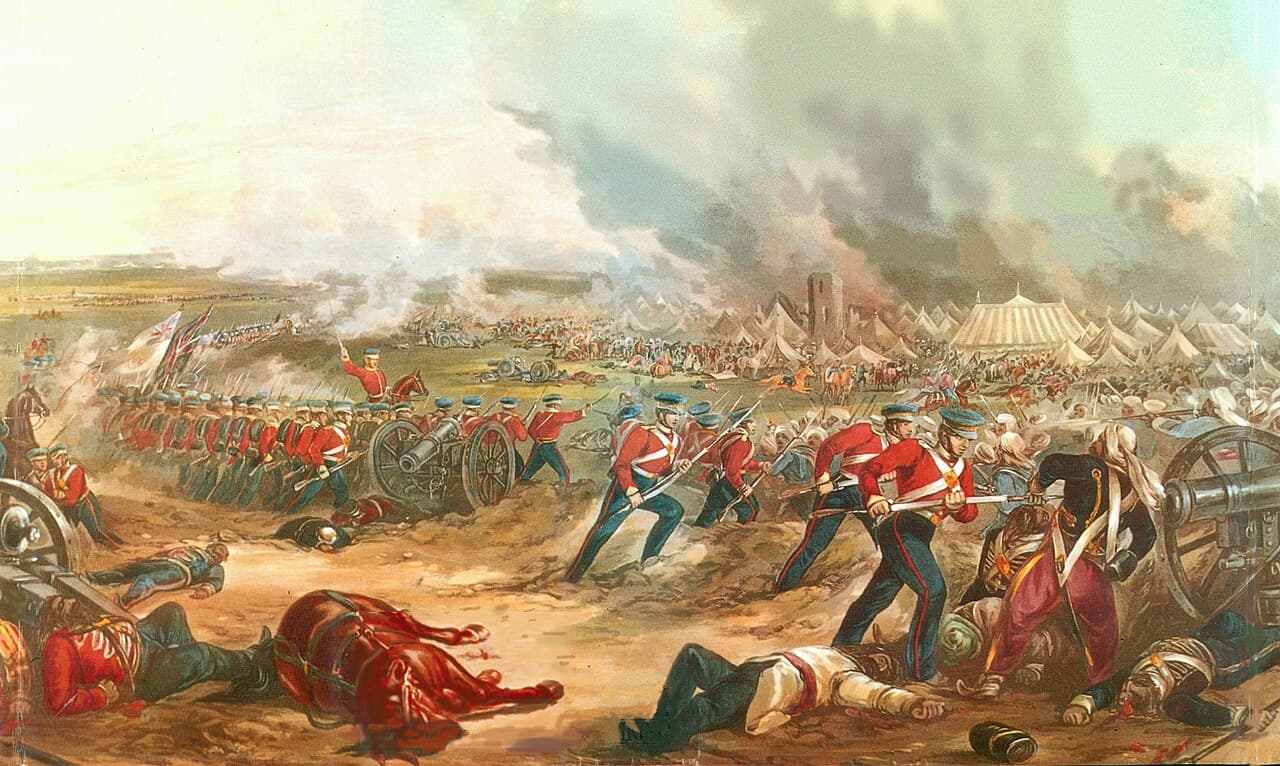
Battle of Ferozeshah
During the First Anglo-Sikh War, a fierce night battle occurred where Sikh artillery dominated initially and British forces suffered devastating casualties. Despite British victory, they came close to complete defeat.
Ferozeshah
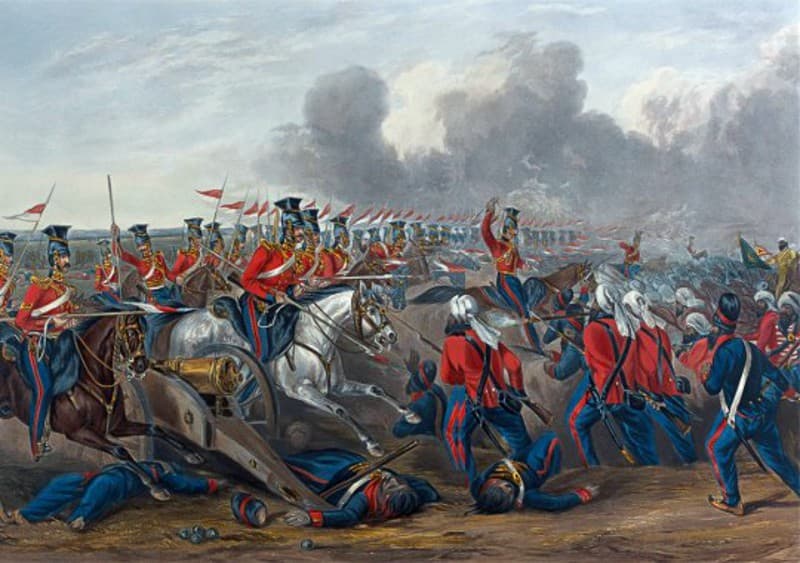
Battle of Aliwal
A major engagement of the First Anglo-Sikh War where British forces clashed with the Khalsa Army. The battle was part of the broader conflict that threatened Sikh sovereignty.
Aliwal
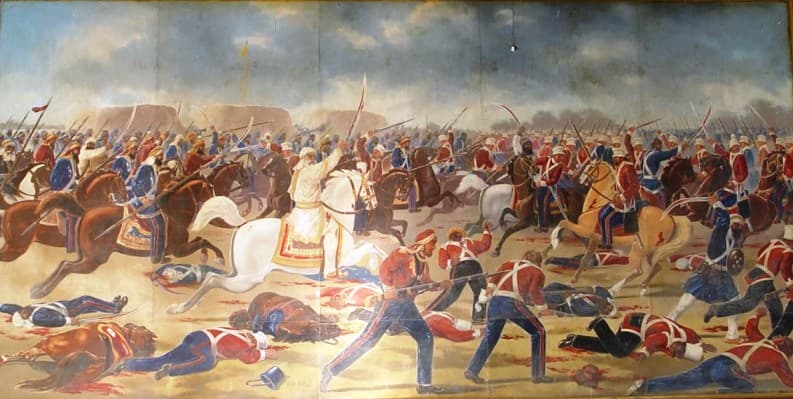
Battle of Sobraon
A decisive battle of the First Anglo-Sikh War resulted in significant losses for the Khalsa Army. This defeat severely weakened the empire's military capability.
Sobraon
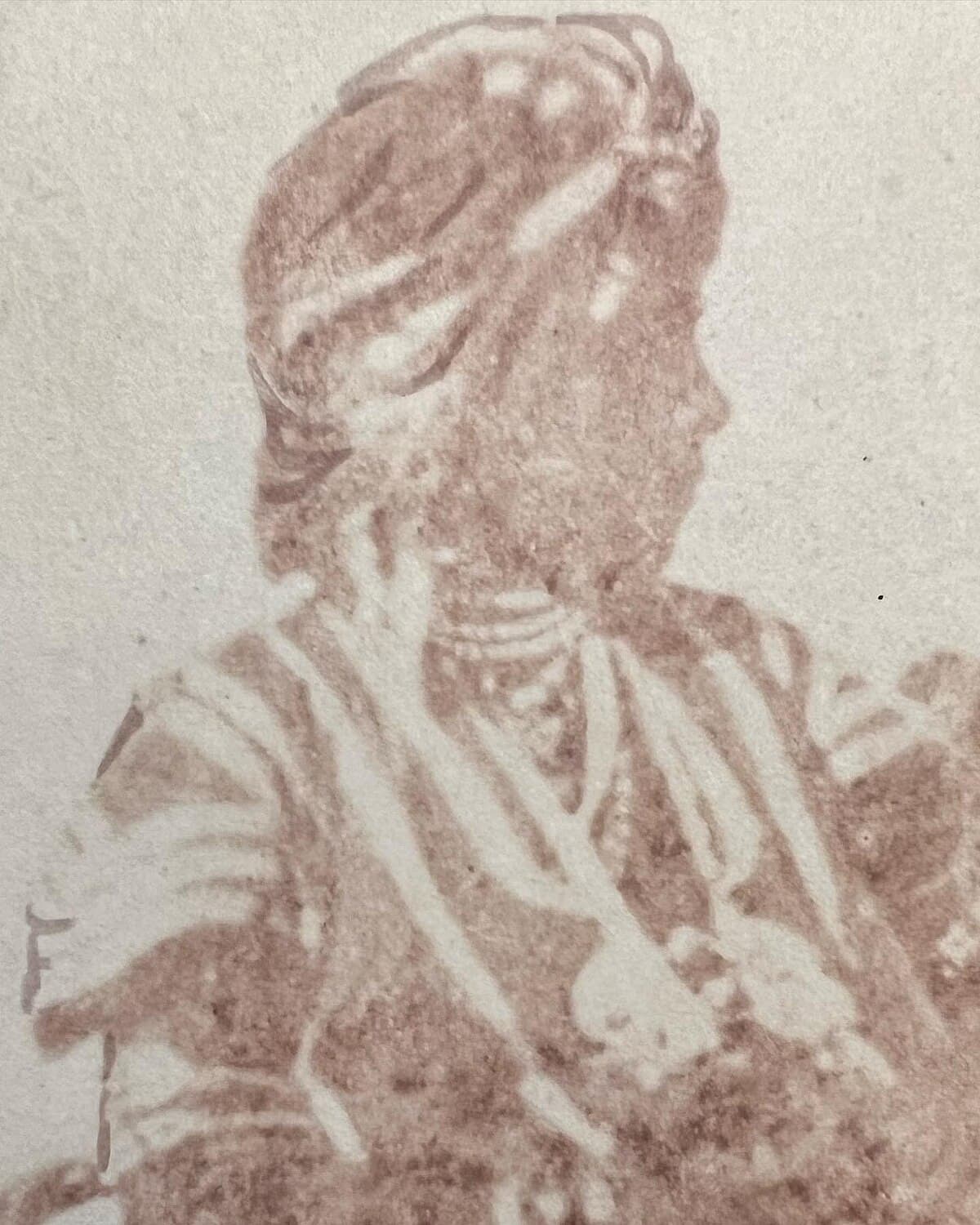
Dissolution of the Sikh Empire
Following defeat in the Second Anglo-Sikh War, the Sikh Empire was formally dissolved and annexed by the British East India Company. The territory was divided into princely states and the British Punjab province.
Lahore