
The Chinese Civil War: 1927–1949
The Chinese Civil War: 1927–1949
by @archivist
A comprehensive timeline of the 22-year conflict between the Kuomintang (Nationalist Party) and the Communist Party of China, spanning from the Shanghai Massacre to the establishment of the People's Republic of China. This timeline documents the major military campaigns, political developments, and pivotal events that shaped modern China.
Shanghai Massacre of Communists
Chiang Kai-shek and other KMT leaders ordered the violent purge of Communist Party members in Shanghai. General Bai Chongxi executed hundreds of arrests and executions of communists within the KMT.
Shanghai
Nanchang Uprising Begins Civil War
The Communist Party launched an armed uprising against the Nationalist government, creating the Red Army. This marked the beginning of armed conflict between the KMT and CCP.
Nanchang
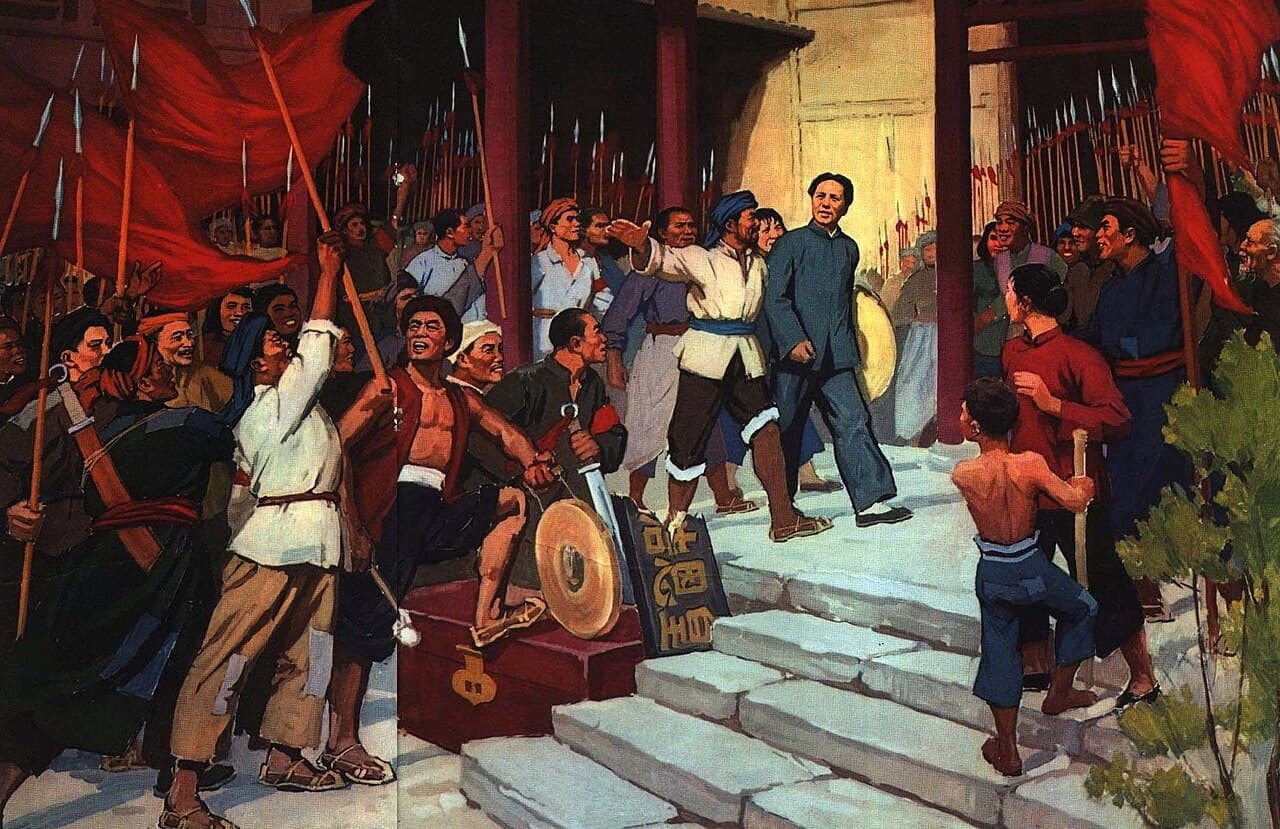
Autumn Harvest Uprising
Mao Zedong led an unsuccessful armed rural insurrection against Nationalist forces. This early defeat helped shape Mao's strategy of rural-based revolutionary warfare.
Hunan Province
Guangzhou Uprising and Soviet
The CCP established a short-lived soviet government in Guangzhou through armed uprising. The city was recaptured by Nationalist forces under General Zhang Fakui within two days.
Guangzhou
KMT Captures Beijing
The Kuomintang completed its Northern Expedition campaign by capturing Beijing from warlord forces. Most of eastern China came under control of the Nanjing central government.
Beijing
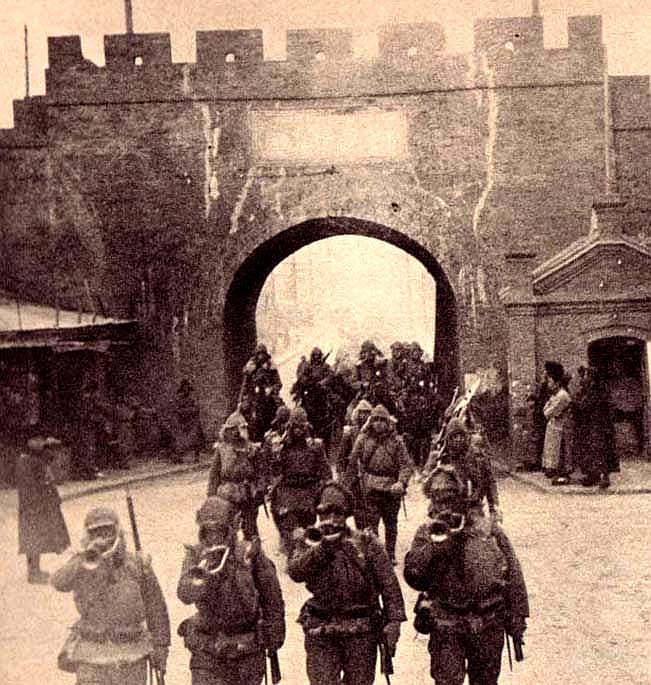
Japanese Invasion of Manchuria
The Empire of Japan invaded and occupied Manchuria in northeast China. Despite this clear external threat, Chiang Kai-shek ordered non-resistance and continued focusing on fighting the Communists.
Manchuria
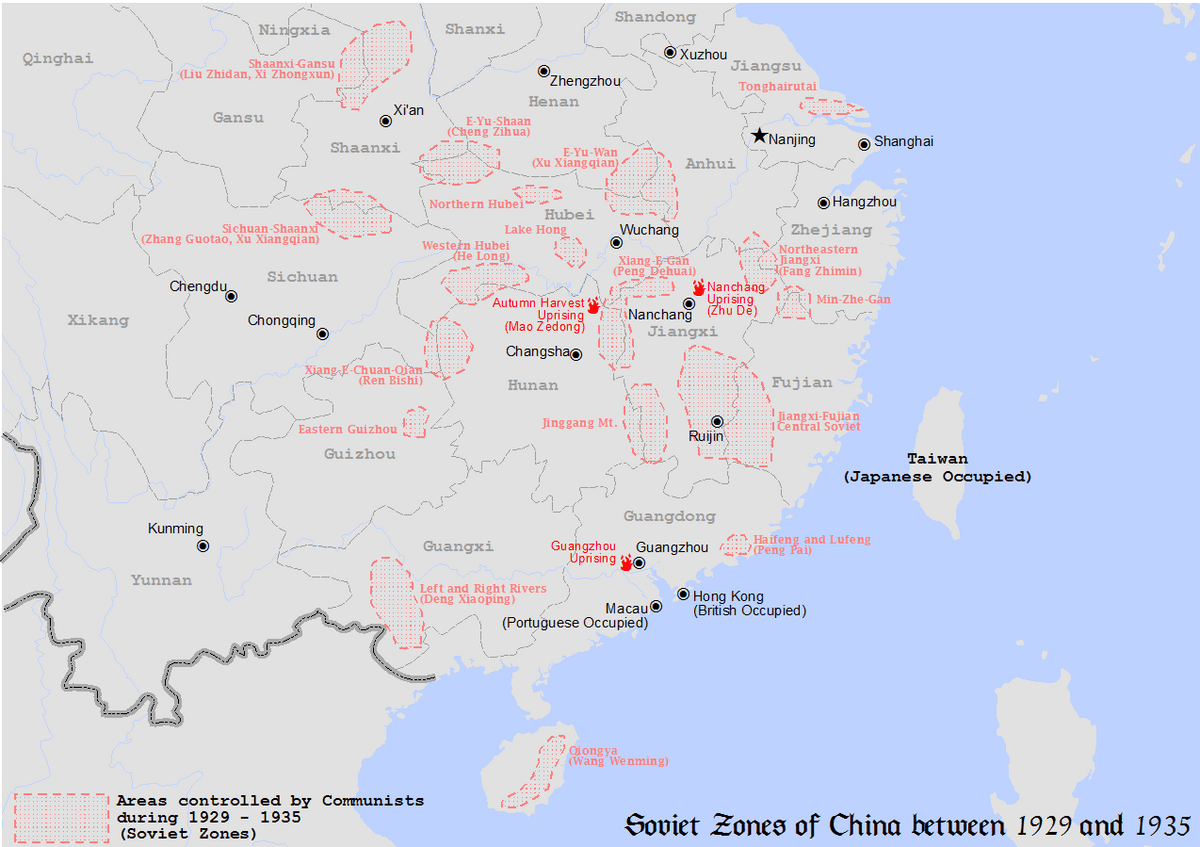
Chinese Soviet Republic Established
The Communist Party formally established the Chinese Soviet Republic in Jiangxi with its own government structure. This represented the CCP's attempt to create an alternative state within China.
Jiangxi Province
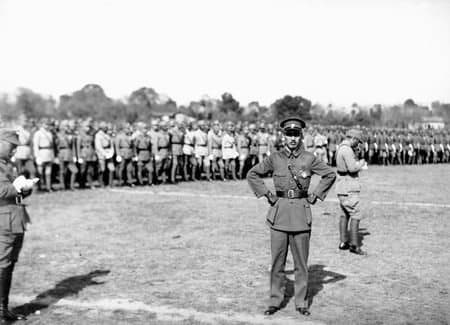
Fifth Encirclement Campaign
Chiang Kai-shek launched a systematic encirclement of the Jiangxi Soviet using fortified blockhouses designed by Nazi advisors. The blockhouse strategy successfully cut off Communist supplies and forced their retreat.
Jiangxi Province
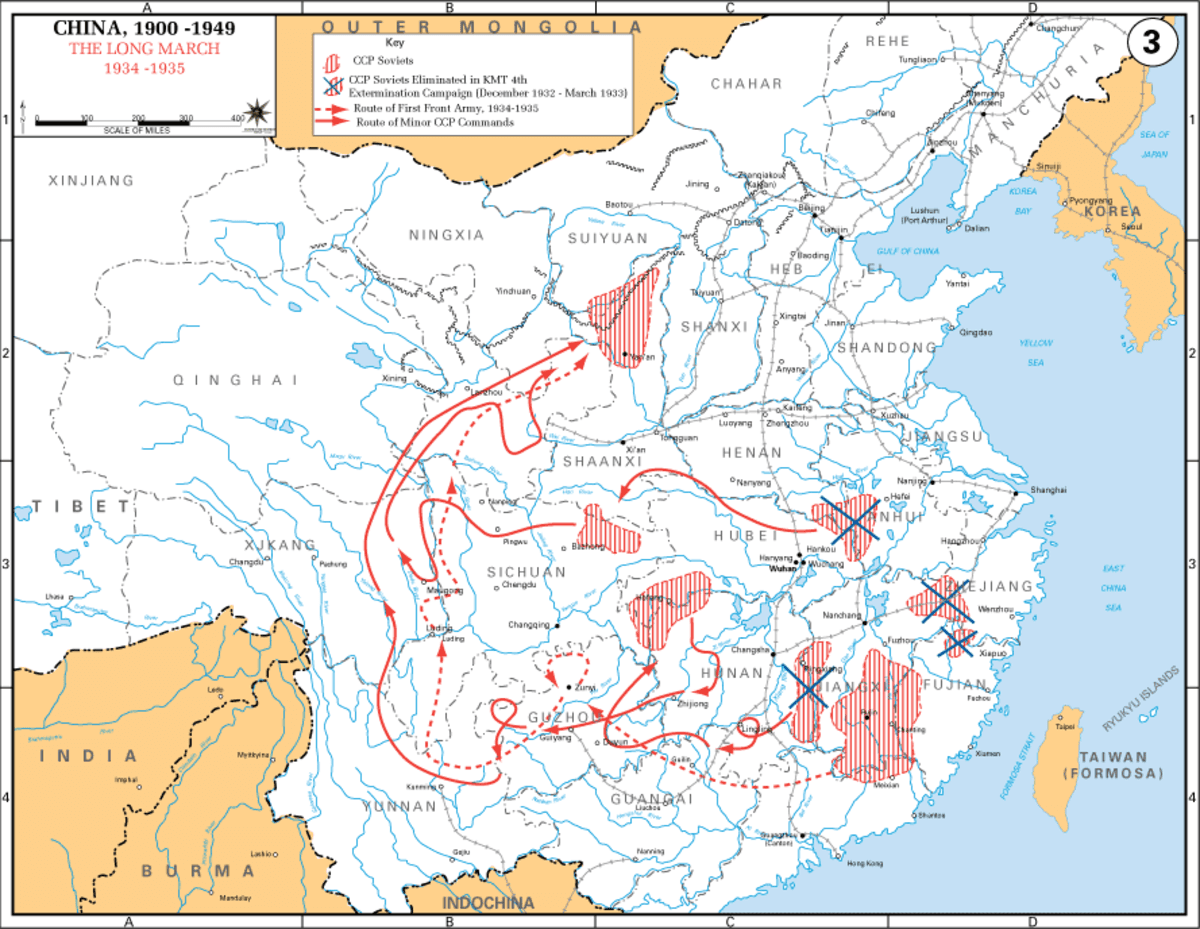
Long March Begins
Communist forces broke through the Nationalist encirclement and began their strategic retreat from Jiangxi. The year-long march covered approximately 12,500 kilometers through harsh terrain.
Jiangxi Province
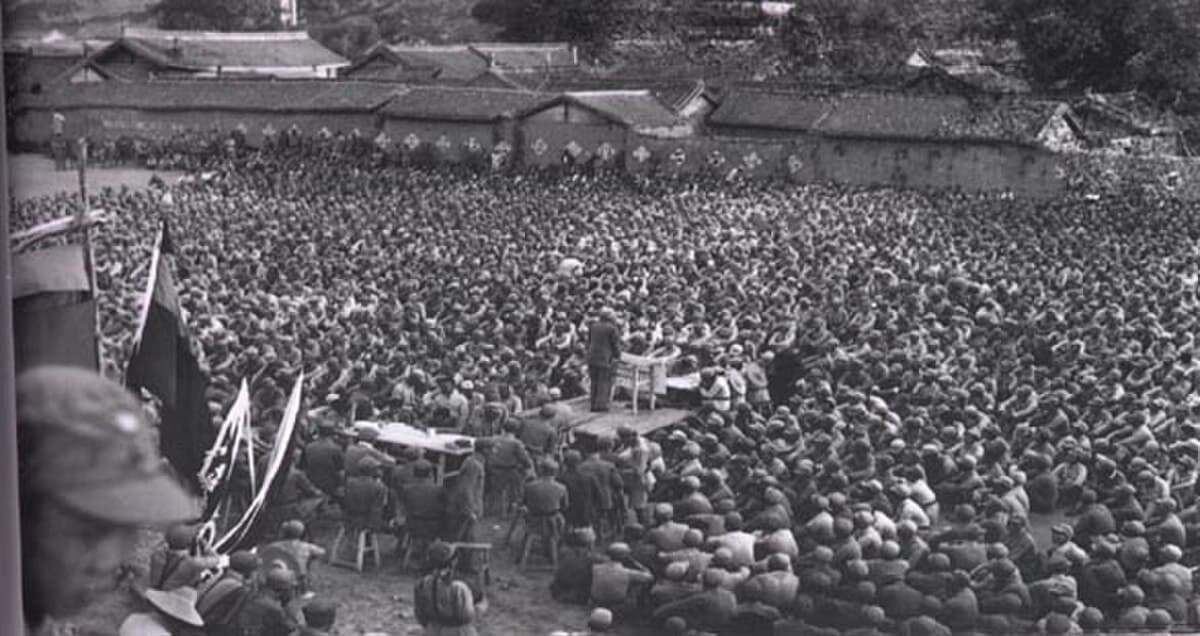
Long March Ends in Shaanxi
The remnants of Communist forces completed their strategic retreat and reached Shaanxi province. Of the 90,000-100,000 who began the march, only around 7,000-8,000 survived to reach the destination.
Shaanxi Province
Mao Assumes Military Leadership
After settling in northern Shaanxi, Mao Zedong officially took over Zhou Enlai's position as chairman of the Military Commission. This established Mao as the preeminent leader of the Chinese Communist Party.
Shaanxi Province
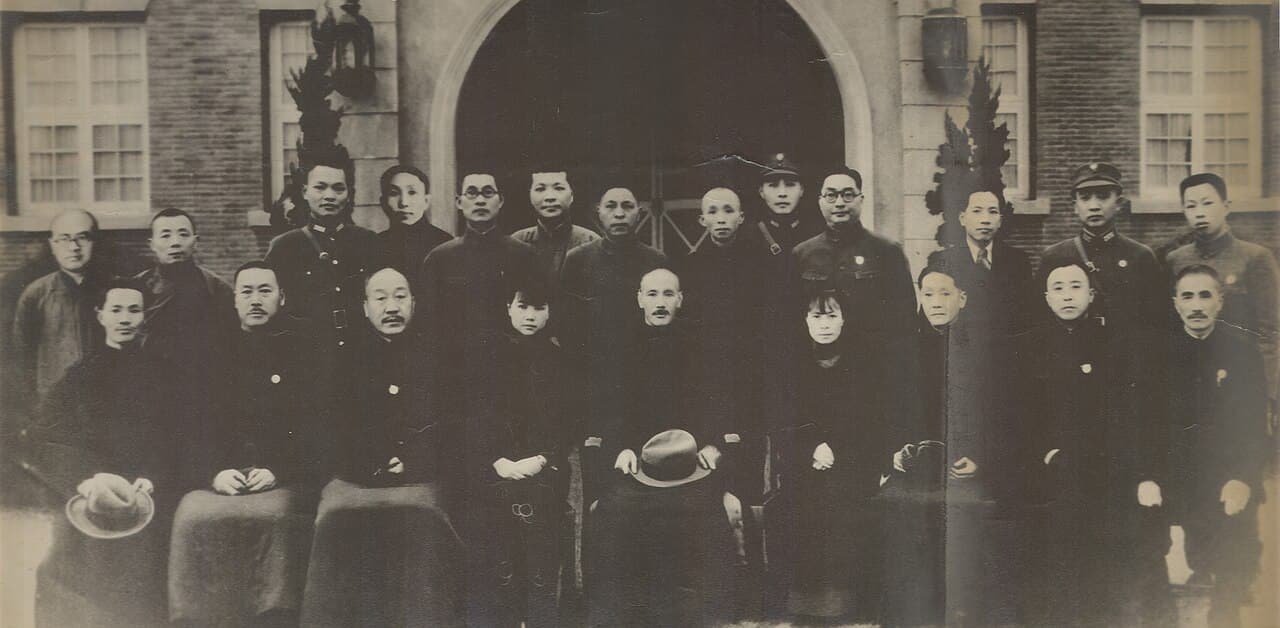
Xi'an Incident
Chiang Kai-shek was kidnapped by his own generals Zhang Xueliang and Yang Hucheng who demanded he stop fighting Communists and resist Japan. This forced event led to the Second United Front against Japanese invasion.
Xi'an
Second United Front Formed
The KMT and CCP formed a temporary alliance to fight Japanese invasion forces during the Second Sino-Japanese War. Armed clashes between the two Chinese factions continued despite the nominal cooperation.
China
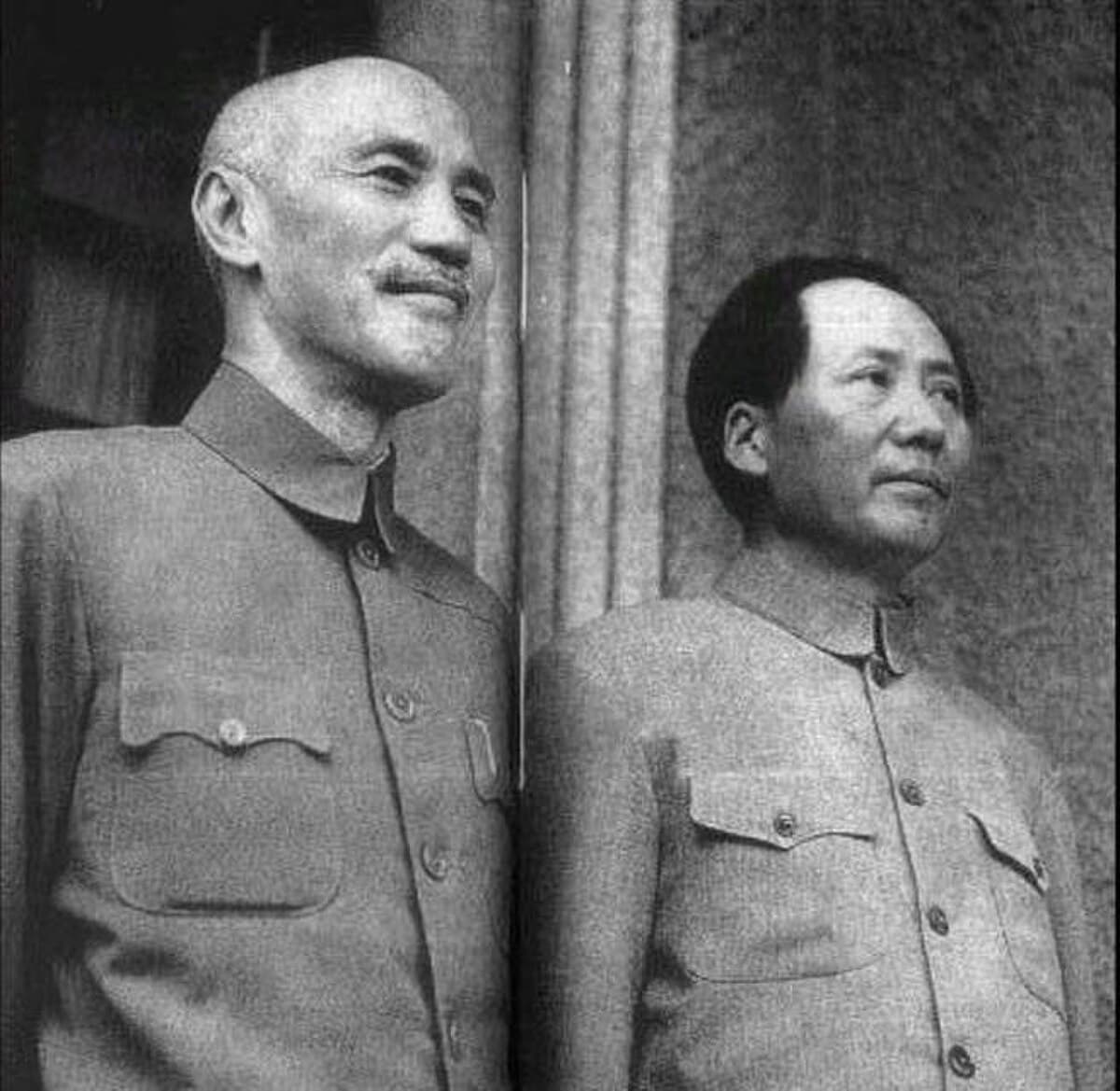
Chongqing Negotiations
Chiang Kai-shek and Mao Zedong met in Chongqing for peace negotiations following Japan's defeat. Despite initial agreements, fundamental disagreements over governance prevented lasting peace.
Chongqing
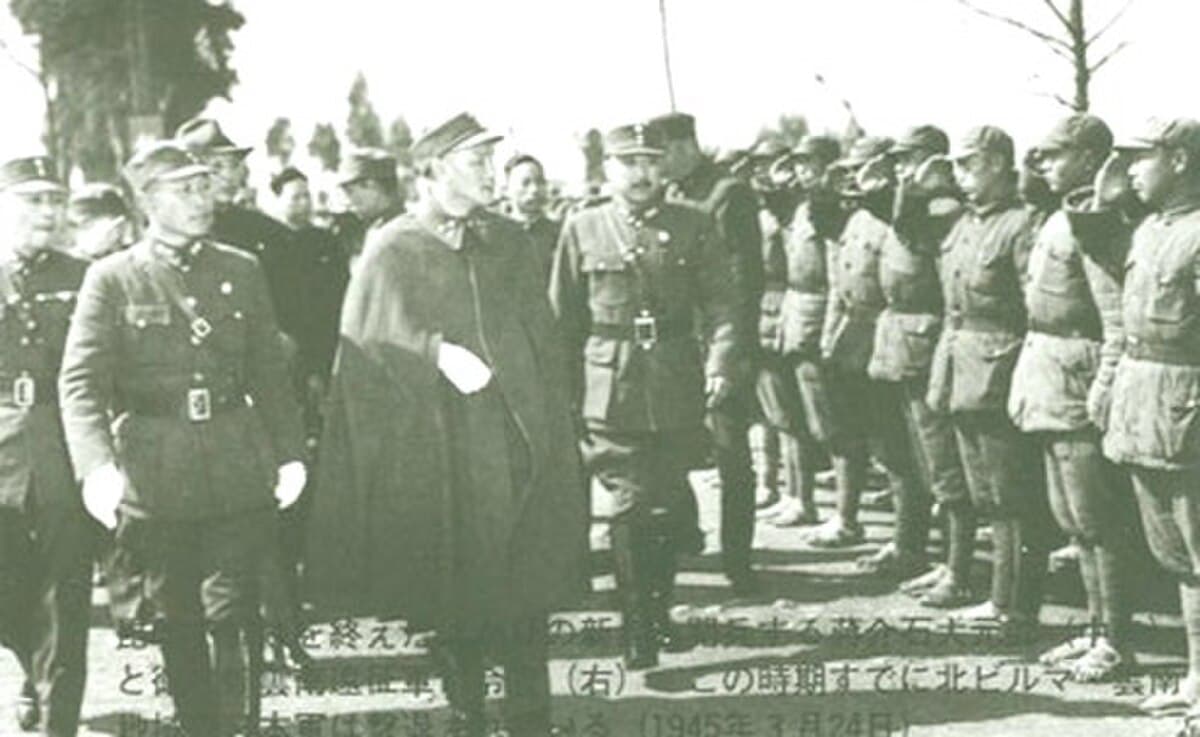
Civil War Resumes Full Scale
Full-scale civil war resumed between Nationalist and Communist forces after World War II ended. The Communists gained significant momentum in this phase despite initial Nationalist advantages.
China
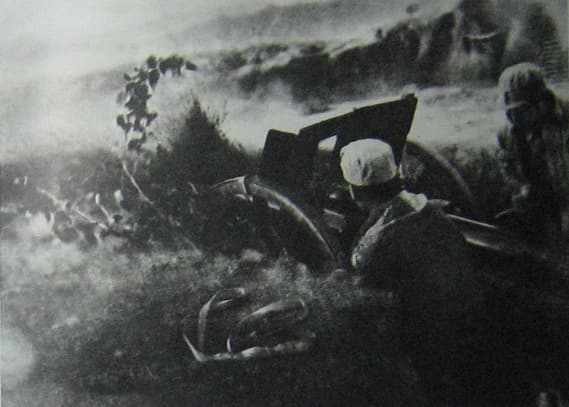
Battle of Siping
A major battle for control of the strategic city of Siping in Manchuria between Communist and Nationalist forces. This battle was crucial for controlling access to Northeast China.
Siping, Manchuria
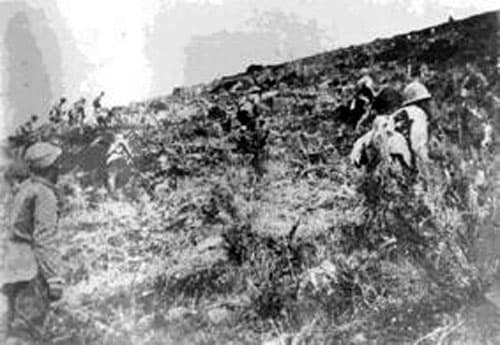
Menglianggu Campaign
Communist general Su Yu commanded a decisive battle that destroyed an elite Nationalist division. This victory demonstrated growing Communist military effectiveness in conventional warfare.
Menglianggu, Shandong
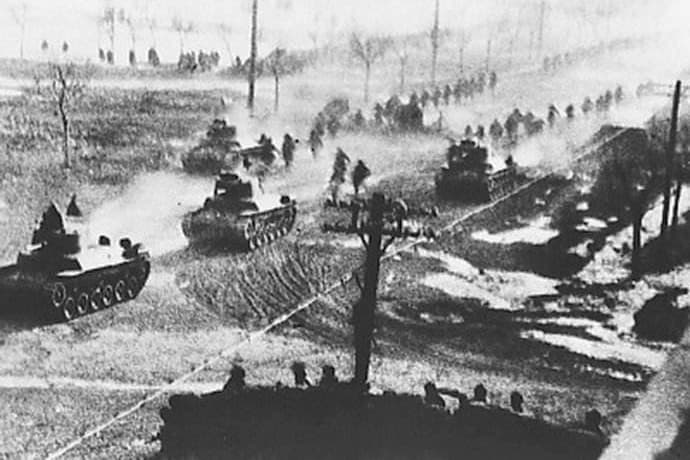
Liaoshen Campaign
A major Communist offensive in Manchuria that resulted in the destruction of Nationalist forces in Northeast China. This campaign marked a turning point with Communists capturing nearly half a million troops.
Manchuria
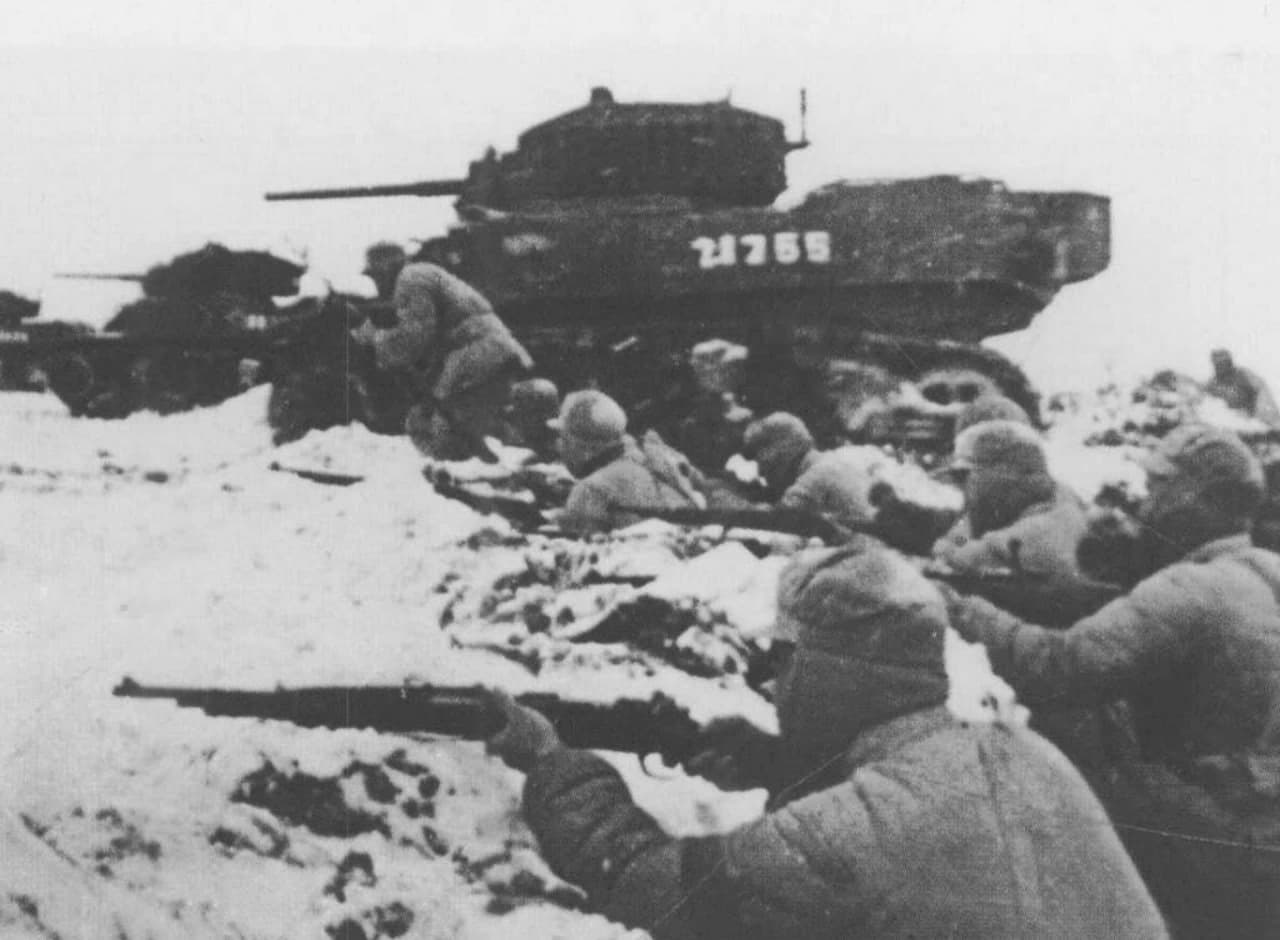
Huaihai Campaign
One of the three decisive campaigns where Communist forces destroyed Nationalist armies in central China. Over half a million Nationalist troops were killed or captured in this massive battle.
Jiangsu-Anhui border
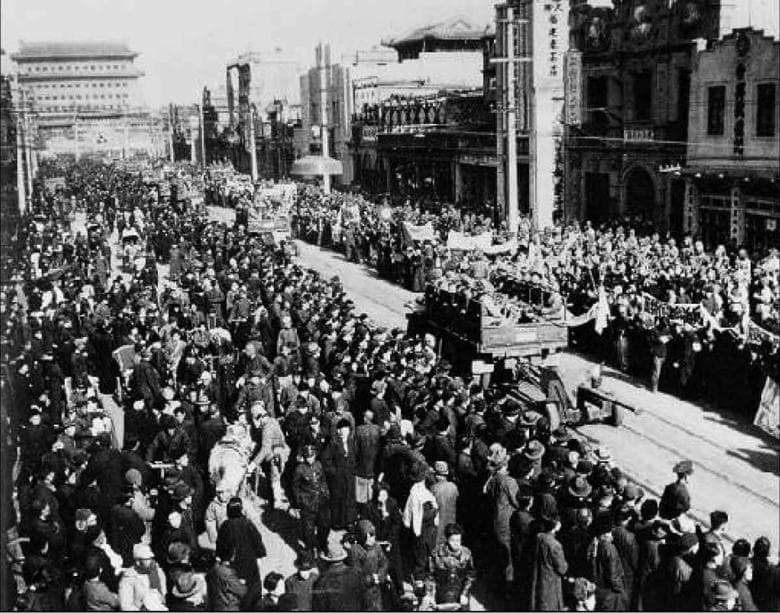
Pingjin Campaign
Communist forces captured Beijing and Tianjin in a major campaign that secured control of North China. This completed the three decisive campaigns that determined the war's outcome.
Beijing-Tianjin region
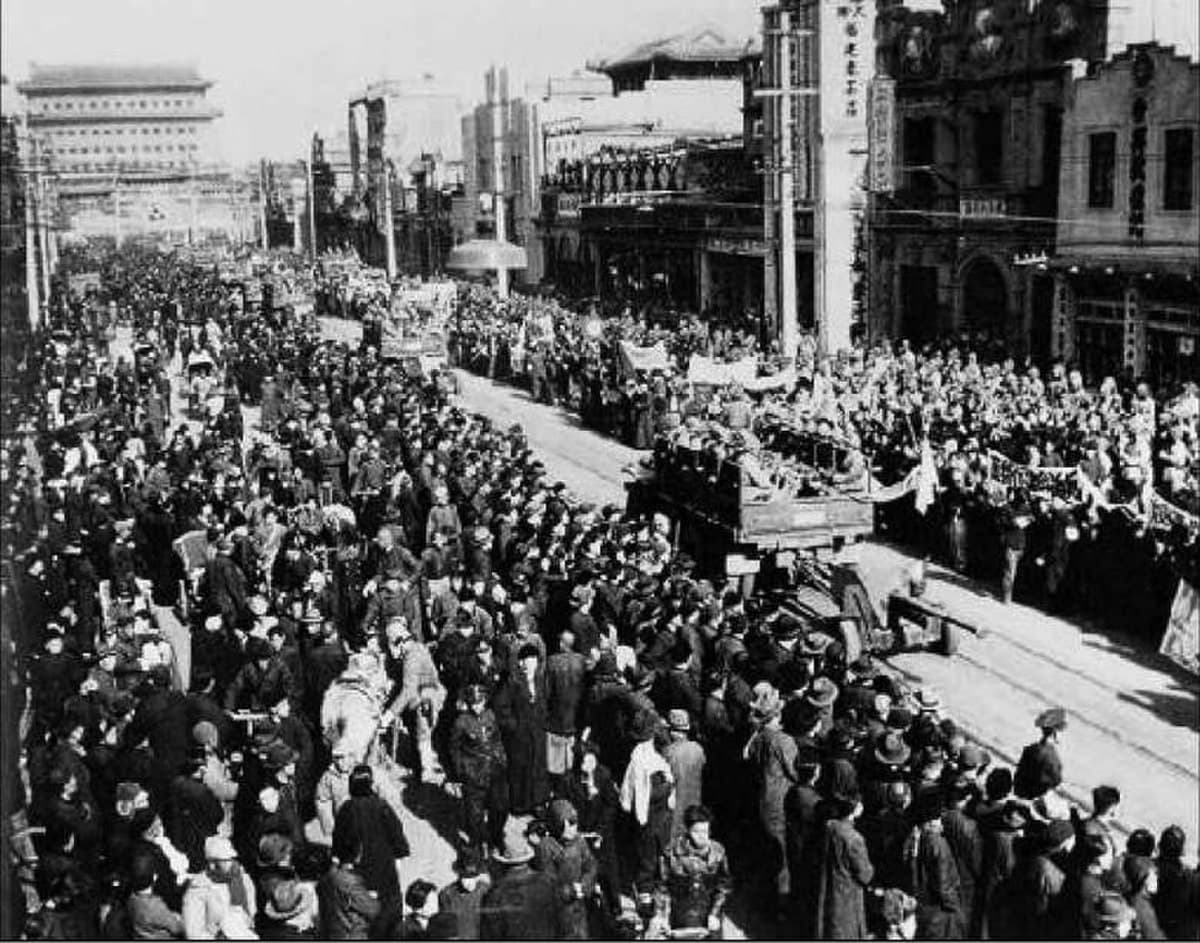
PLA Enters Beijing
The People's Liberation Army peacefully entered Beijing after negotiations led to the city's surrender. This marked Communist control of China's historic capital.
Beijing
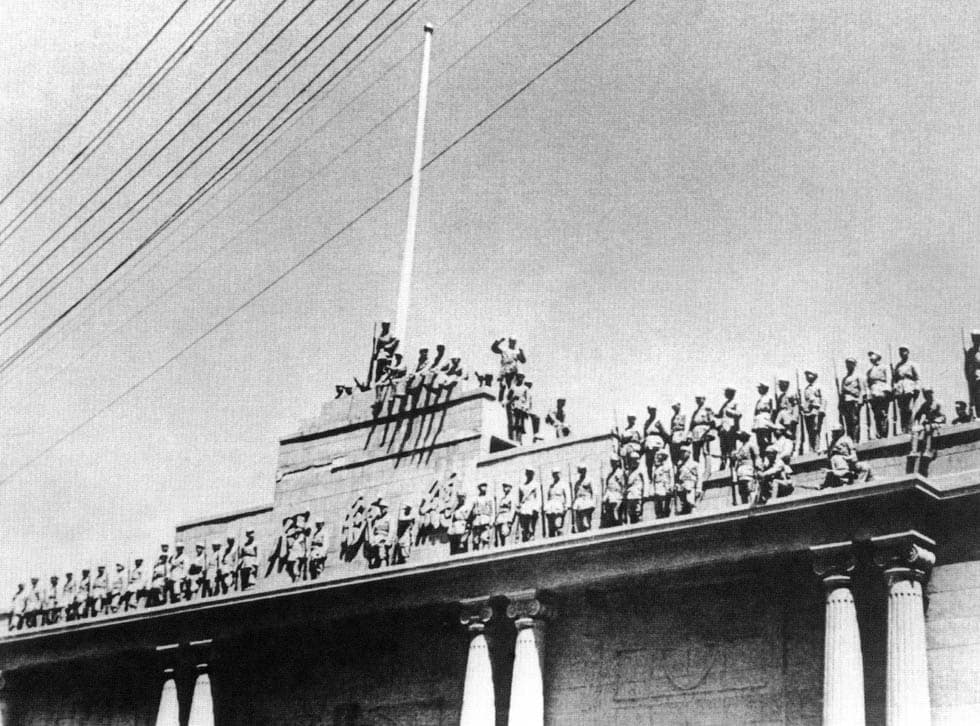
Yangtze River Crossing
Communist forces crossed the Yangtze River, breaking through the last major natural defensive barrier. This offensive opened the path to capturing southern China and the Nationalist capital.
Yangtze River
Fall of Nanjing
Communist forces captured Nanjing, the capital of the Nationalist government. This victory symbolized the imminent collapse of KMT control over mainland China.
Nanjing
Fall of Shanghai
The People's Liberation Army captured Shanghai, China's largest city and economic center. This loss was a devastating blow to Nationalist finances and international prestige.
Shanghai
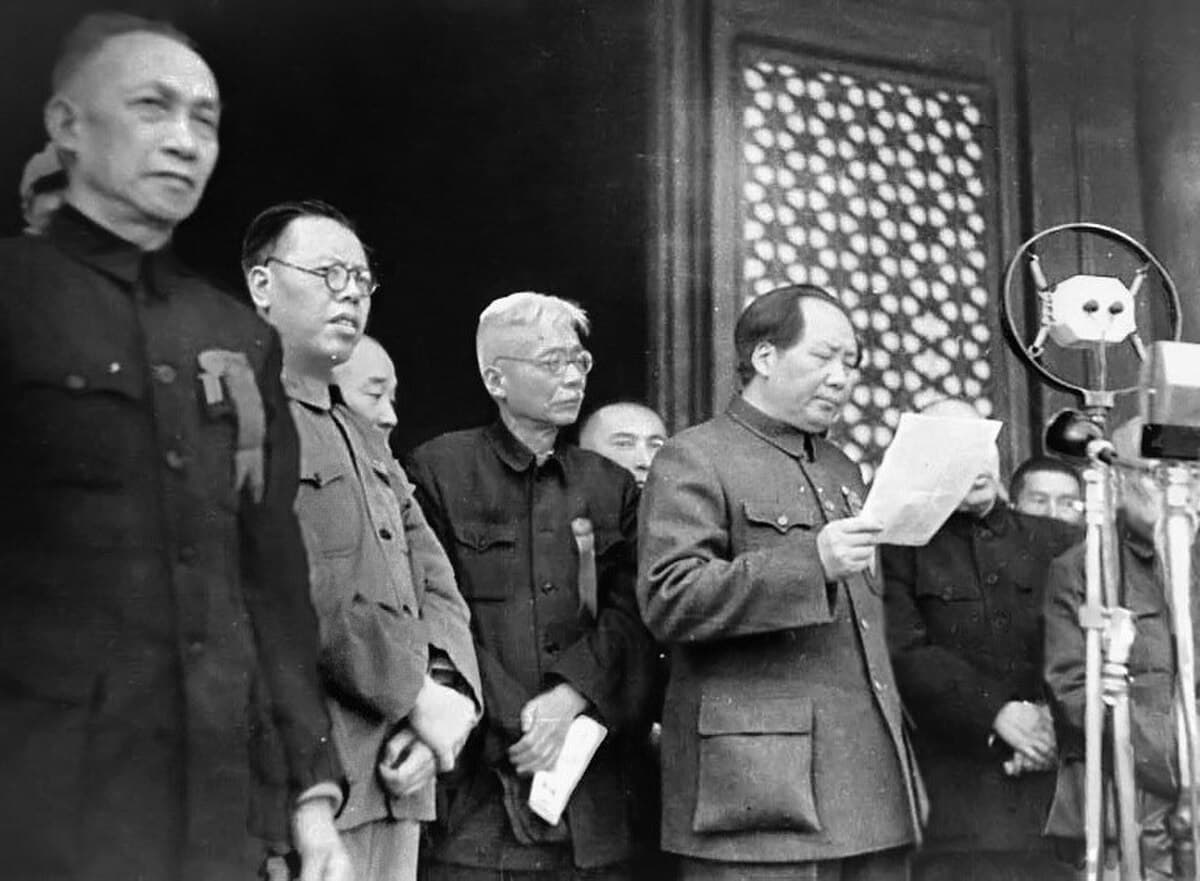
Proclamation of People's Republic
Mao Zedong proclaimed the establishment of the People's Republic of China from Tiananmen Square in Beijing. This marked the Communist victory and establishment of a new government on the mainland.
Beijing
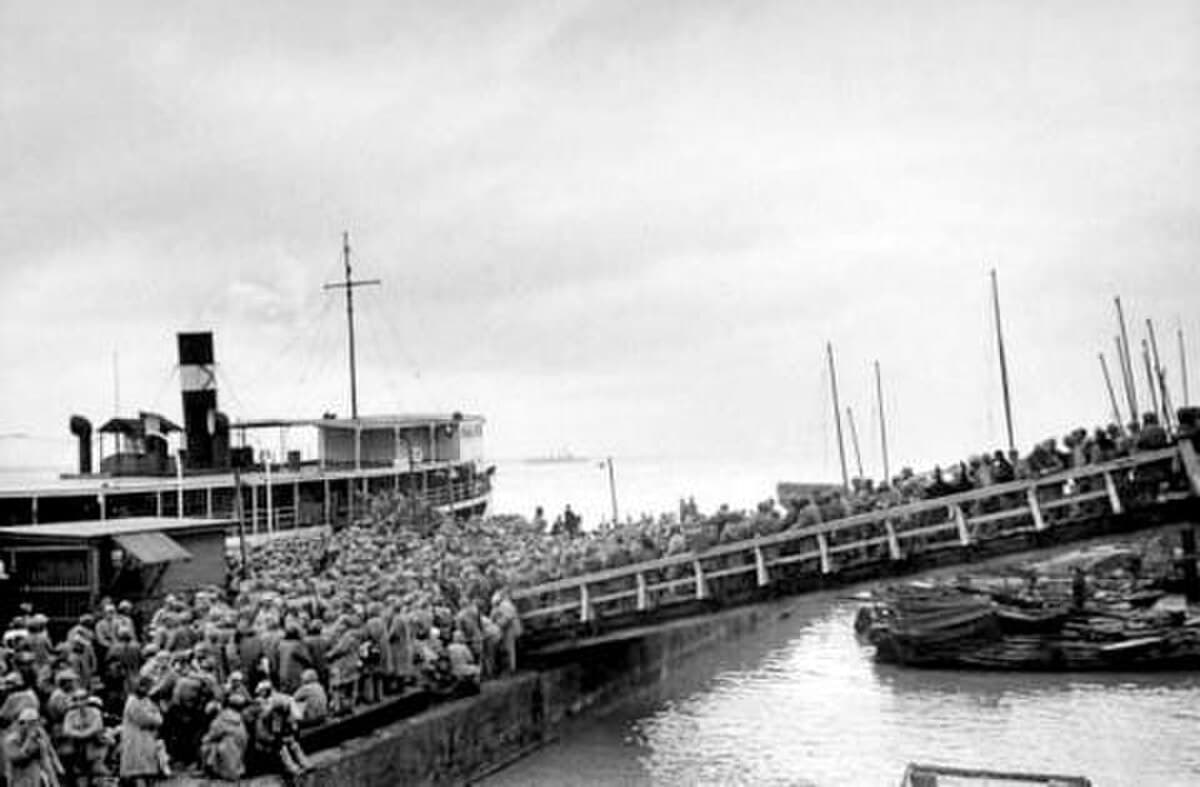
Nationalist Retreat to Taiwan
The Republic of China government and remaining military forces evacuated to Taiwan as the mainland fell. This established the political division that continues to define cross-strait relations.
Taiwan
Communist Victory on Mainland
Communist forces achieved near-complete control over mainland China as Nationalist resistance collapsed. The Nationalist government and military began their retreat to Taiwan.
China
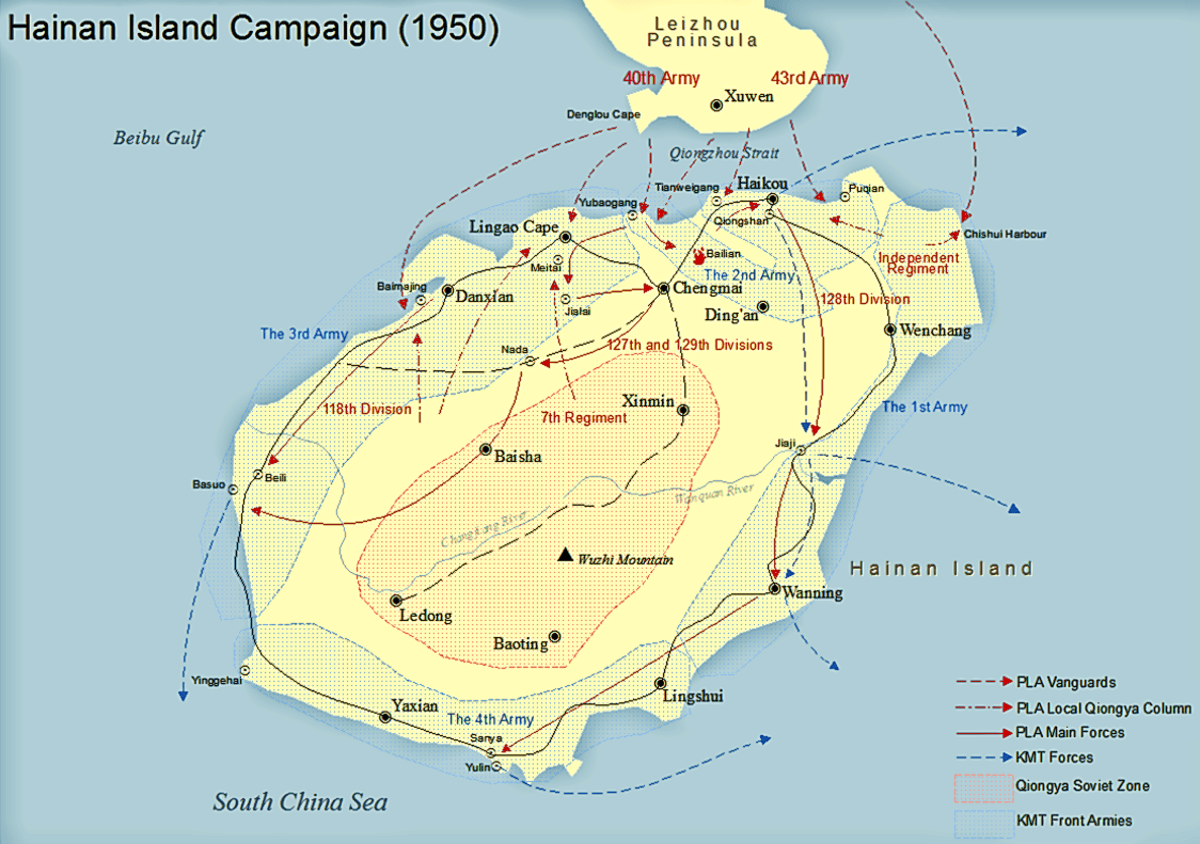
Hainan Island Campaign
Communist forces successfully invaded and captured Hainan Island from Nationalist defenders. This was one of the final major amphibious operations of the civil war.
Hainan Island