
Kashmir: A Disputed Territory, 1846-Present
Kashmir: A Disputed Territory, 1846-Present
by @archivist
This timeline traces the complex history of Kashmir from its acquisition by the Dogra dynasty through partition, wars, and contemporary disputes involving India, Pakistan, and China. It documents the key political, military, and diplomatic events that have shaped this strategically important and contested region.
Pāṇini References Kashmir in Ashtadhyayi
Sanskrit grammarian Pāṇini wrote the Ashtadhyayi, providing the earliest direct textual mention of Kashmir by name. He referred to the inhabitants of the region as Kashmirikas.
Kashmir
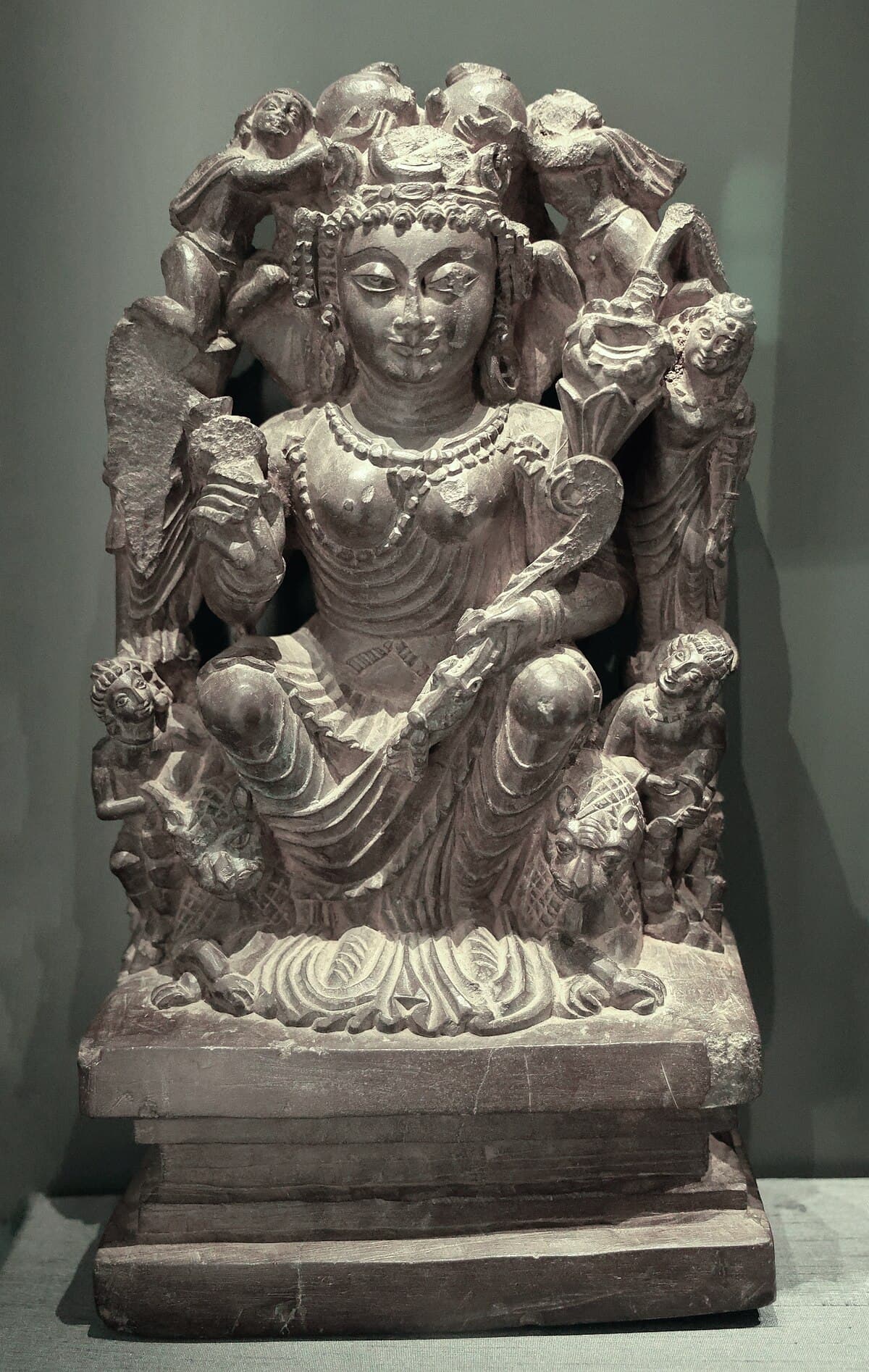
Kashmir Becomes Hindu-Buddhist Center
During the first millennium's early centuries, the Kashmir region emerged as a major religious center for both Hinduism and Buddhism. This period saw significant cultural and religious development in the valley.
Kashmir Valley
Hindu Dynasties Rule Kashmir
A succession of Hindu dynasties governed the Kashmir region for seven centuries. This era witnessed the development of Kashmir Shaivism as a significant philosophical tradition.
Kashmir
Rinchan Shah Establishes Muslim Rule
Rinchan Shah ascended as Kashmir's first Muslim ruler, founding the Kashmir Sultanate. This marked the beginning of Islamic governance in the region after centuries of Hindu rule.
Kashmir
Mughal Empire Annexes Kashmir
The Kashmir region was incorporated into the expanding Mughal Empire, beginning a period of Mughal administration. This integration lasted for over 160 years and brought significant cultural influence.
Kashmir
Afghan Durrani Empire Controls Kashmir
Following Mughal decline, the Afghan Durrani Empire took control of Kashmir. The Afghan period was characterized by harsh governance that created hardship for the local population.
Kashmir
Sikhs Conquer Kashmir Valley
Ranjit Singh's Sikh forces conquered Kashmir from the Afghan Durrani Empire, ending four centuries of Muslim rule. Though initially welcomed, Sikh governance proved oppressive with anti-Muslim legislation.
Kashmir Valley
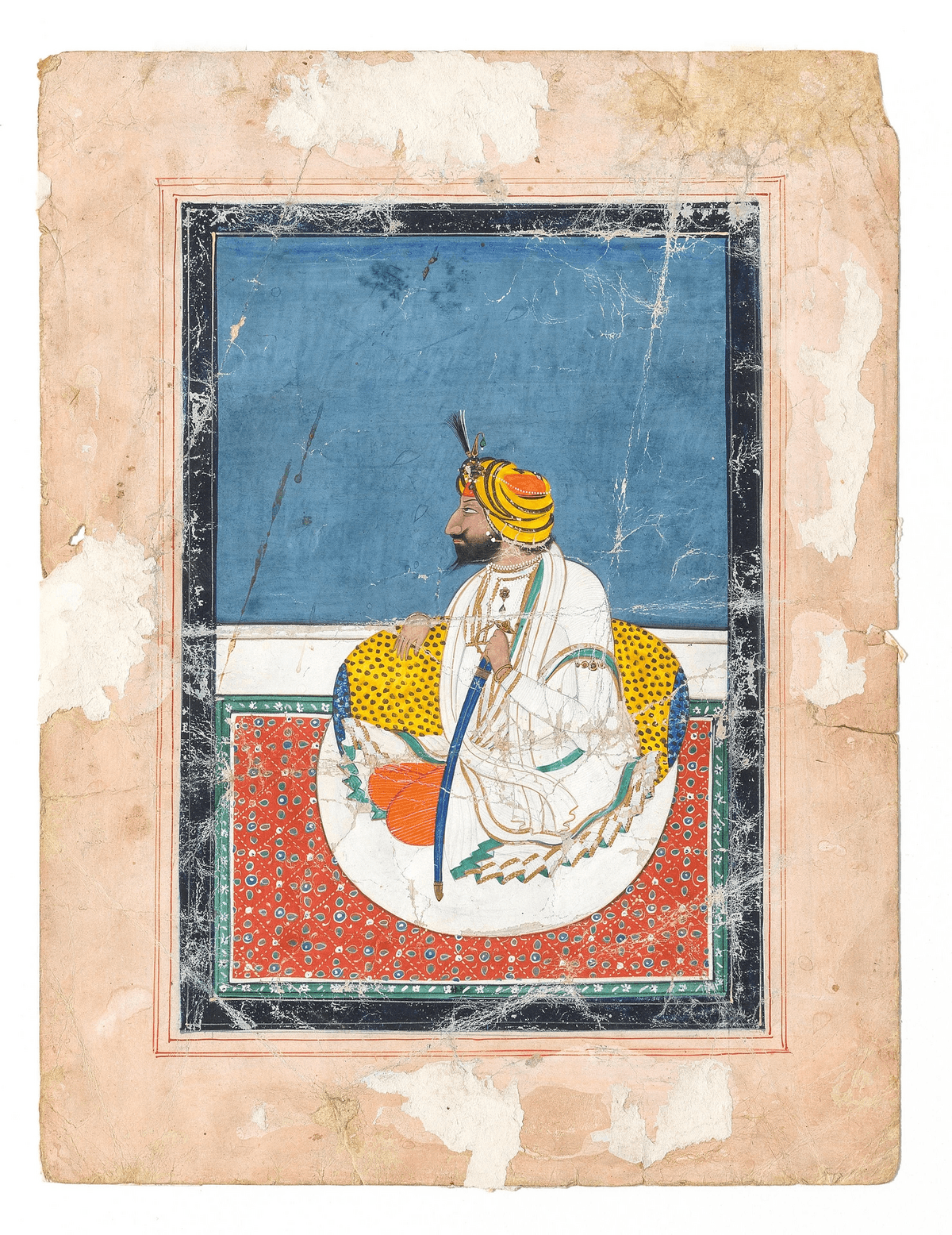
Gulab Singh Becomes Raja of Jammu
Gulab Singh, who had distinguished himself in Sikh military campaigns, was appointed Raja of Jammu by Maharaja Ranjit Singh. This positioned him to later become a major regional power.
Jammu
Kashmir Famine Prompts Tax Reforms
A devastating famine struck Kashmir, leading Sikh authorities to reduce land taxes to half the agricultural produce. They also began offering interest-free loans to help farmers recover.
Kashmir
Gulab Singh Conquers Ladakh
Raja Gulab Singh and his general Zorawar Singh Kahluria successfully conquered Ladakh through a military campaign. This territorial expansion strengthened Gulab Singh's position in the region.
Ladakh
First Anglo-Sikh War Begins
The First Anglo-Sikh War erupted between the Sikh Empire and the British East India Company. Gulab Singh maintained neutrality until the Battle of Sobraon, then served as mediator.
Punjab
Treaty of Amritsar Creates Princely State
Following the Sikh defeat, the British sold Kashmir to Gulab Singh for 75 lakhs rupees through the Treaty of Amritsar. This established the princely state of Jammu and Kashmir under his rule.
Amritsar
Hari Singh Ascends Kashmir Throne
Hari Singh became the ruling Maharaja of Jammu and Kashmir princely state. He would be the last monarch, facing the critical decision of accession during the 1947 partition.
Jammu and Kashmir
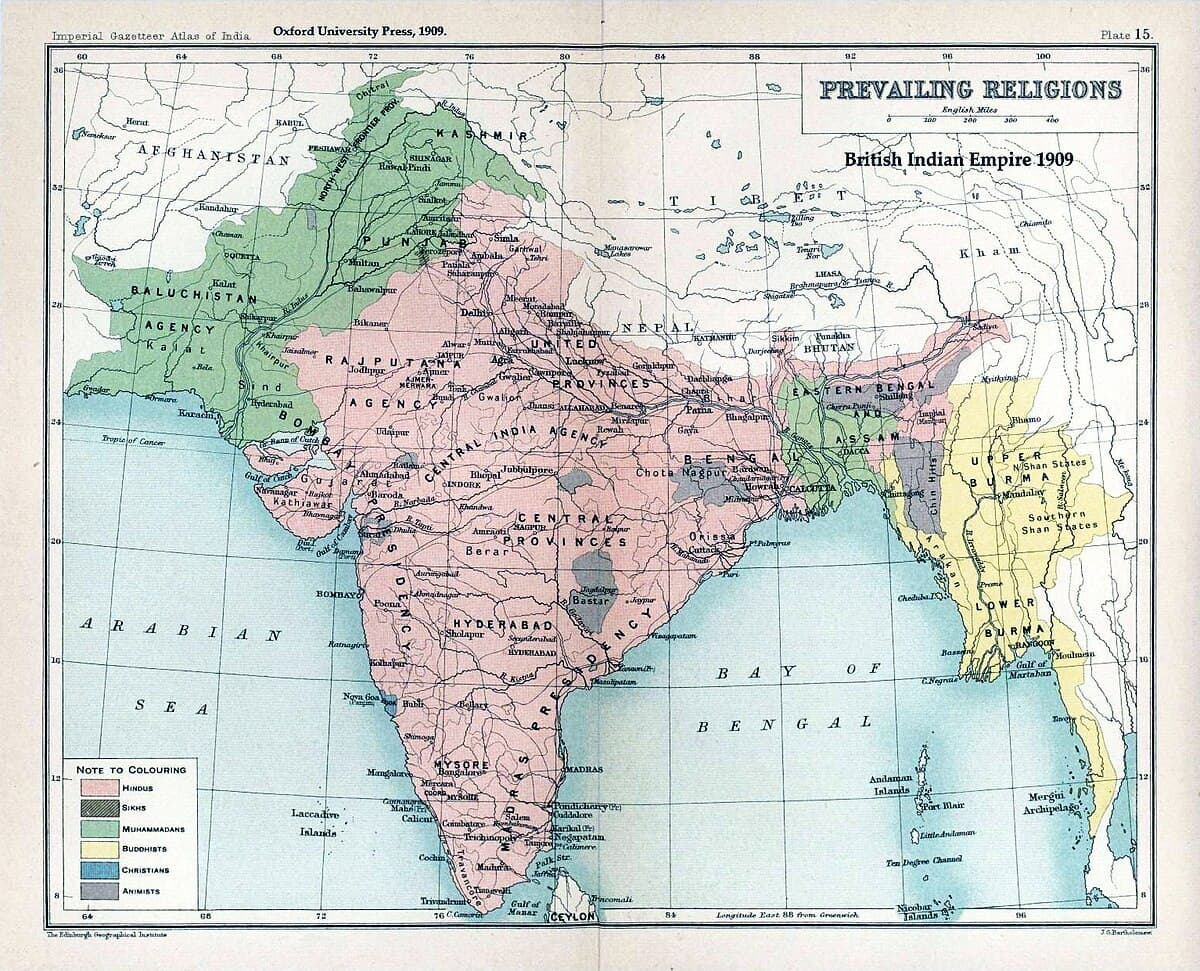
Kashmir Shows Muslim Majority in Census
The British census documented Kashmir's demographics showing a 77% Muslim majority, 20% Hindu population, and 3% Buddhist and Sikh minorities. This data became crucial for partition debates.
Kashmir
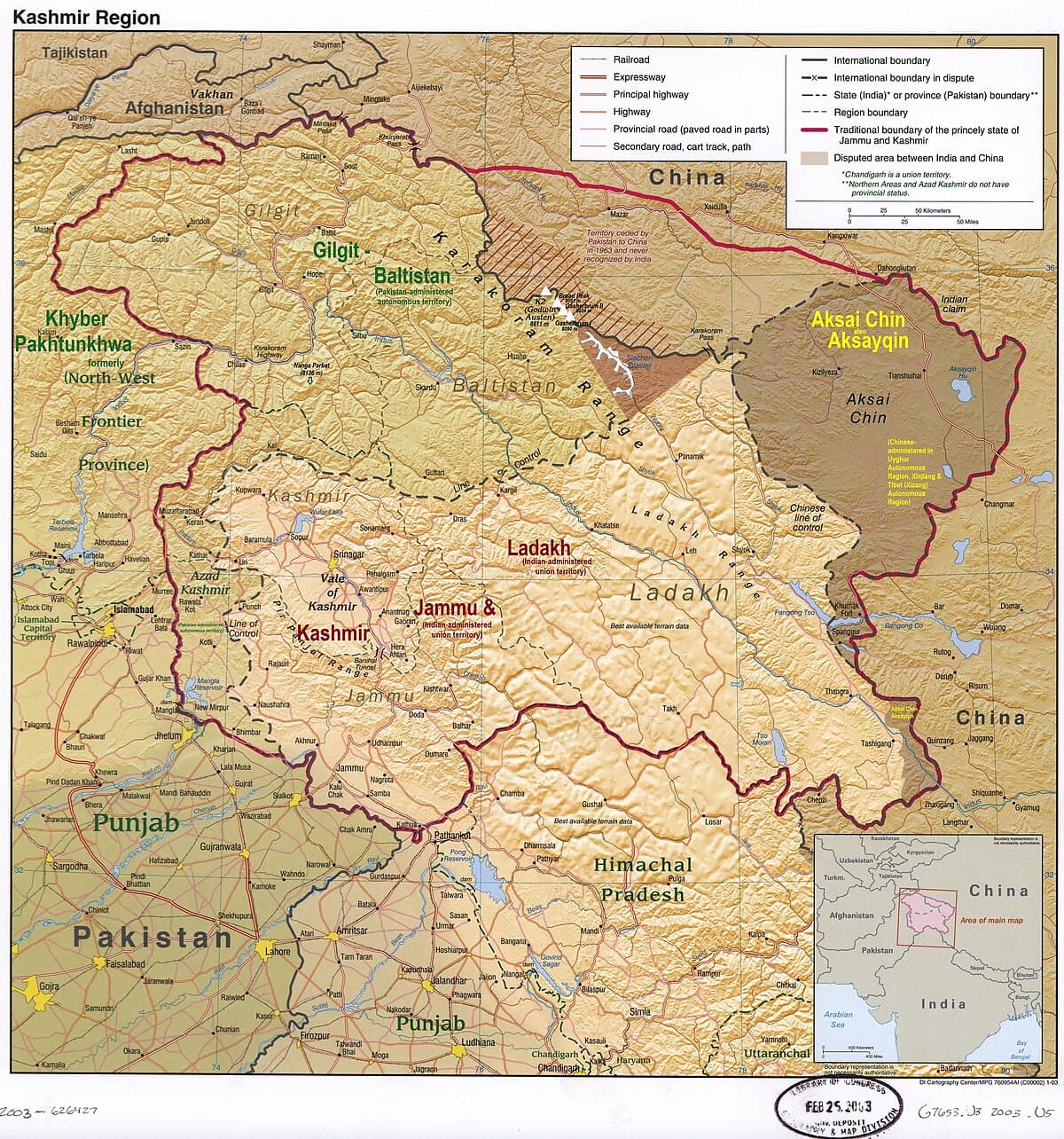
Kashmir Accession and Indo-Pakistani War
When Maharaja Hari Singh hesitated to choose between India and Pakistan, Pakistani irregulars invaded. The Maharaja then signed the Instrument of Accession to India, triggering war between the two new nations.
Kashmir
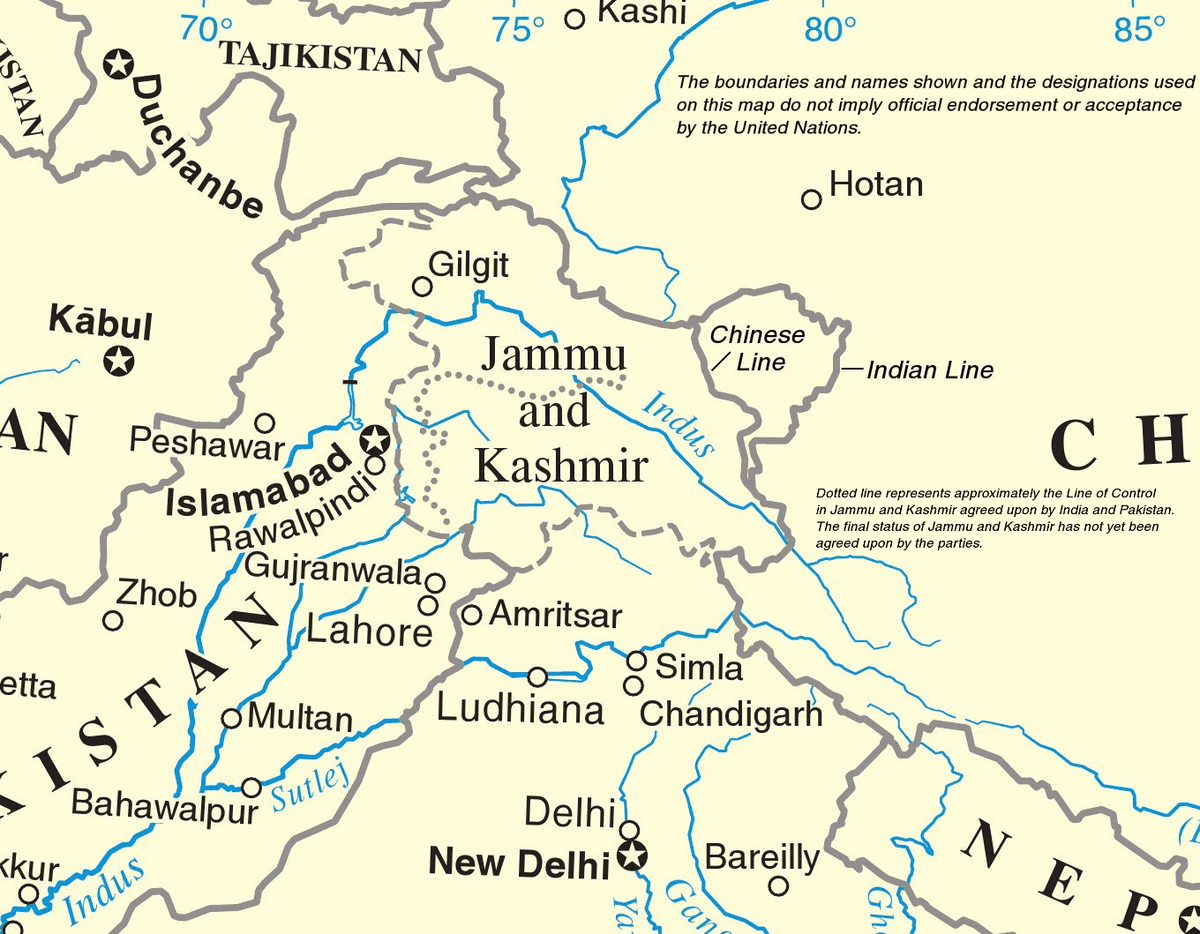
UN Brokers Kashmir Ceasefire
The United Nations successfully mediated a ceasefire between India and Pakistan over Kashmir. However, the promised plebiscite was never conducted, leaving the dispute unresolved.
Kashmir
Chinese Army Enters Aksai Chin
The Chinese People's Liberation Army moved into the northeastern Ladakh region of Aksai Chin. This incursion went initially undetected by India and set the stage for future border conflicts.
Aksai Chin
China Completes Military Road Through Aksai Chin
China finished constructing a strategic military road through Aksai Chin to improve connectivity between Xinjiang and western Tibet. India's belated discovery of this road heightened tensions.
Aksai Chin
Sino-Indian War Over Kashmir Territory
Border disputes over Aksai Chin escalated into full-scale war between China and India. The conflict resulted in Chinese control of the disputed northeastern region.
Aksai Chin and Arunachal Pradesh
Pakistan Cedes Trans-Karakoram Tract to China
Pakistan formally ceded the Trans-Karakoram Tract to China through a border agreement. India rejected this transaction, claiming the territory as part of Kashmir.
Trans-Karakoram Tract
Second Indo-Pakistani War Over Kashmir
India and Pakistan fought another declared war primarily over the Kashmir territory. The conflict ended in stalemate with a UN-negotiated ceasefire maintaining the status quo.
Kashmir
Kargil War Between India and Pakistan
The third major armed conflict between India and Pakistan erupted in the Kargil district of Kashmir. Pakistani forces infiltrated across the Line of Control before being repelled by Indian military operations.
Kargil, Kashmir
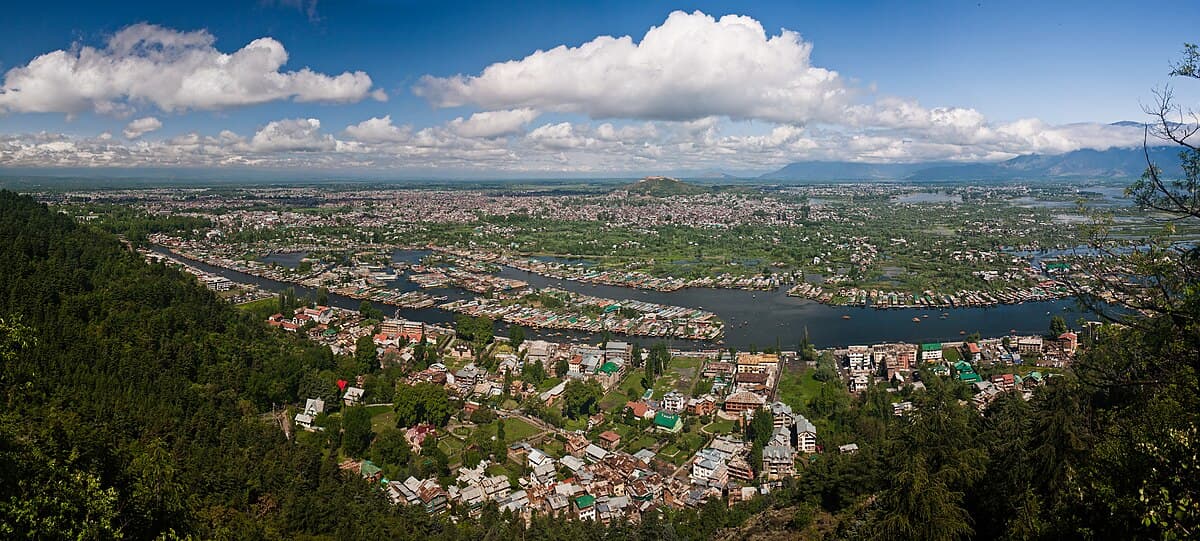
Kashmir Floods Devastate Srinagar
Severe flooding inundated the Kashmir capital of Srinagar and hundreds of surrounding villages. The disaster caused massive destruction and highlighted the region's vulnerability to climate events.
Srinagar, Kashmir
India Revokes Kashmir's Special Status
The Indian government bifurcated Jammu and Kashmir into two union territories and revoked Article 370 granting special autonomy. This constitutional change fundamentally altered Kashmir's administrative status within India.
Jammu and Kashmir